Amstelveen has so far matched expectations: tidy and efficient, much like the Dutch hockey teams at this World Cup. Covering the Indian teams’ (mis)fortunes at the event meant setting up camp in this quaint Amsterdam suburb for the first 10 days, putting a visit to the other co-host, Wavre in Belgium, on hold.
Unlike the FIFA World Cup, where matches are spread across the host country, the hockey showpiece had games throughout the day at just two venues. At the Wagener Stadion, where India played all its group matches, the packed schedule left little scope to explore beyond the complex, home to Hoofdklasse club Amsterdam AH&BC.
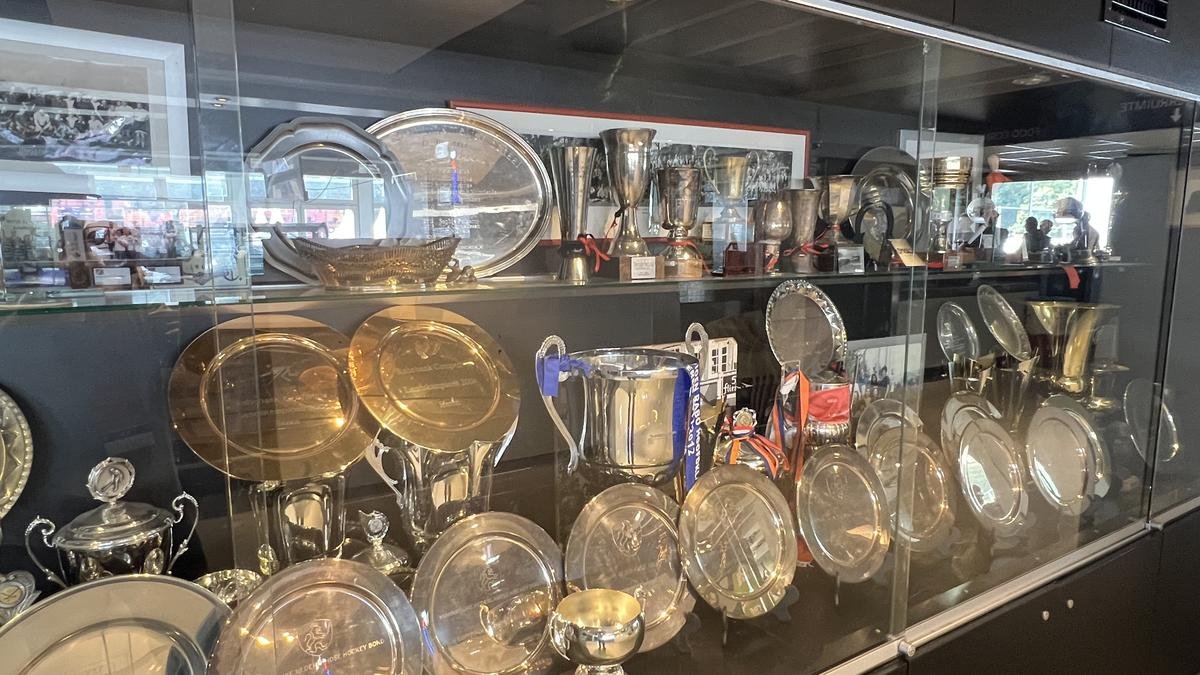
Amsterdam AH&BC is the oldest hockey club in mainland Europe, with a history spanning 125 years. It has enjoyed so much success that its entire collection of honours can’t even fit in the clubhouse’s trophy case, with several having to wait their turn to make an appearance. One of the oldest trophies, jokingly referred to as the ‘goblet’ from the Harry Potter books, has won the lottery to make the cabinet this time around.
There is a popular saying in the Netherlands that there are more bicycles than people, and they are hard to miss. If you aren’t paying attention, you are arguably more at risk of getting hit by a biker than a car here. Cycling seems to be the preferred mode of commute for the locals, including England midfielder Thomas Sorsby, who moved to the city after recently signing for Amsterdam, which plays its home games at the Wagener.
Travelling supporters from India, England and Australia add colour to the setting, but Wales and Argentina fans, despite their small numbers, make a lot of noise. The home supporters at the Wagener aren’t like the ones you witness at a football game in the Netherlands on TV. There’s no rowdiness in the stands. Instead, there’s a real family atmosphere for every Netherlands game.
The home side’s matches have a real sombre setting, relying heavily on the PA system and goals from a Dutch hockey stick, which do come by the bucket-load There is an expectation for the Dutch to roll over opponents, particularly on the women’s side.
“We are at times too spoiled,” is how one local journalist put it.
Their women’s team, after all, is the undisputed queen of the sport. It even has its own song for the World Cup. The catchy number ‘Hockey Ladies’, created by the pop group Turfy Gang, is a massive hit with both the fans and the players. Some of the players took to the stage to dance to the song after their predictable clean sweep of the pool stage.
The only unpredictable element has been the weather. Playing host in the midst of the Dutch summer, it has been a cat-and-mouse game with the rain. Bright sunshine one minute can give way to a gentle drizzle or a downpour out of nowhere. I chose to leave my umbrella in the hotel room, opting for convenience and shedding the extra weight from my carry-on, which was already burdened with gadgets and a tripod. By day four, you know you can brave a passing shower. Disaster struck, however, on the second day of my arrival, in the form of my shoelaces, which seemed to take on a life of their own. Back home, I have to tie them back in place at least five or six times a day, which has become a reflex action by now. But, on tour, with my equipment in tow, it proved to be a recipe for disaster.
At first, it cost me a cracked phone screen and then, more importantly, a shattered mic connector — a key component for my interviews. A couple of alternative options didn’t pan out, and with no Swiggy Instamart to bail me out, a second phone in hand allowed me to carry on with the job.
In the end, Amstelveen offered everything I could’ve ask for: hockey, rain, bicycles and, occasionally, a reminder that life on tour rarely goes exactly to plan.
Published on Aug 25, 2026