While every athlete fights two battles – one on the field and one beyond it – the latter is often far harder for women athletes in India. Here, a girl choosing sport is frequently viewed as an act of rebellion long before it is recognised as ambition.
And before the applause, selections, and the national jersey, there is often a mother standing quietly in the background – protecting fragile dreams from judgment and carrying the emotional weight of a future few others were willing to believe in. For many women athletes, a mother is not merely a parent; she is the first fan, fiercest defender, and the heartbeat behind every victory.
She is also sometimes the only parent.
In the heart of a nation where a daughter’s future is often measured by the grace of her domesticity rather than the strength of her stride, their mothers became quiet revolutionaries. They were the silent vanguard, absorbing the weight of society’s expectations – the endless “shoulds” – so their daughters could pursue the possibilities of “could.”
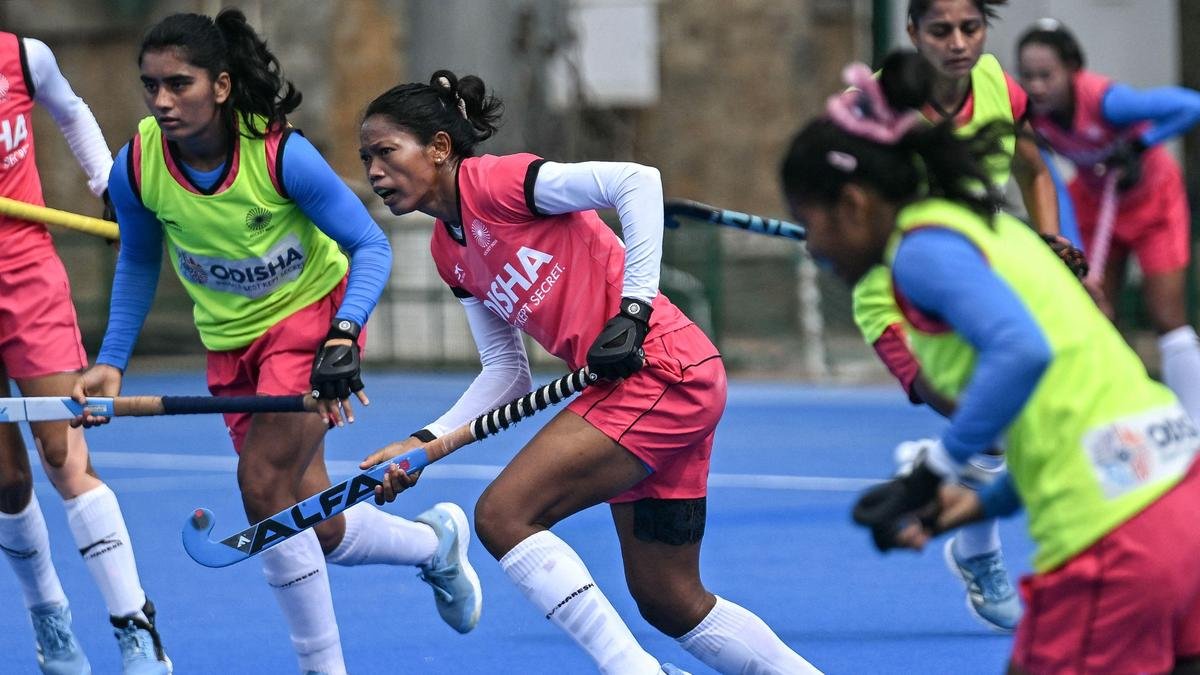
On the occasion of Mother’s Day this year (May 10), Sportstar spoke with Lalremsiami, Udita Duhan, and Jyoti– three hockey players who are all trailblazers in their own way. But this time, the conversations were less about what they achieved with a hockey stick in hand and more about the support system that allowed them to pick it up in the first place.
This is the story of three daughters, three mothers, and the quiet strength that shaped champions.
ALSO READ | Gagan Narang distributes five lakh pellets to mark Mother’s Day
Defying circumstance
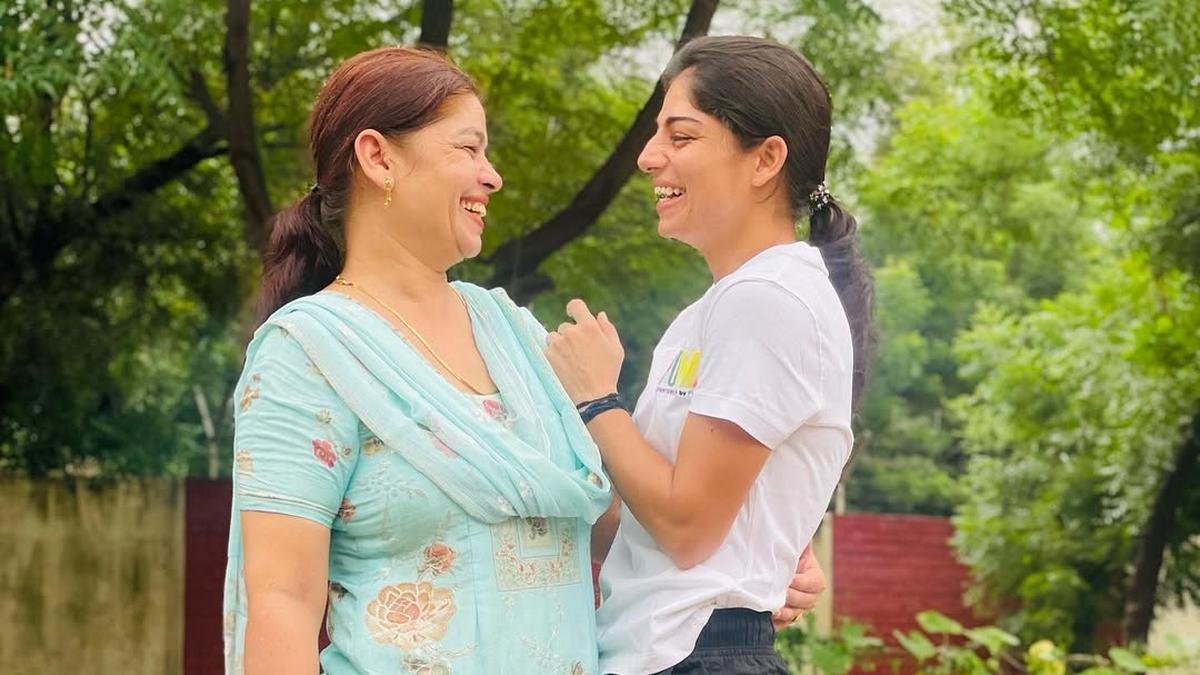
Udita Duhan’s love for sport came from her father, Jasbir Singh, a policeman who loved playing handball. But the fire that eventually turned her into the defensive lynchpin of the Indian hockey team truly ignited only after his passing.
“When I was in school, handball coaches would come for a few days. At the same time, hockey practice used to happen, where boys and girls used to play. I used to like watching them running. I got bored when my coaches didn’t come, so I went and talked to my mom about shifting to play hockey,” she recalls.
“My journey truly started after my father passed away. I had always jokingly told him that when I become an international player and bring medals for India, then I will come to our town as the Deputy Superintendent of Police and get him to salute me.”
“When my father died, I didn’t get to meet him one last time. When I went home and saw my mother for the first time, she hugged me and said: ‘Now I am your father as well as your mother.’”
Those words became a promise. And Geetha Devi spent the years that followed living up to every syllable of it.
ALSO READ | Off-side: To my mother and sister, who shaped my interest in sports, thank you
What followed was not merely the rise of an athlete, but the survival of a dream that could easily have been extinguished.
“After my father passed, people asked my mother what the kids would get by playing sports when they did not have a father. I was 16 or 17 years old then and they would talk about me getting married in a few years etc.”
Udita’s mother refused to surrender her daughter’s future to fear, convention, or gossip.
“She is a strong pillar in my life, she took care of all that and told everyone that she knew what was best for us. That is the biggest motivation and strength for me. That was a turning point.”
Today, the bond between mother and daughter thankfully doesn’t bear the scars of everything they survived together.
“When my father was alive, I had a regular relationship with my mother. I used to get beaten, too! But after he passed, it has become a lot friendlier. We share everything with each other, take each other’s advice on things and talk a lot. She is like my proper best friend now.”
Udita has since won numerous medals for India – from the Asian Champions Trophy and Asia Cup to the Asian Games and Commonwealth Games. Yet, for all the podium finishes and national celebrations, her proudest moment did not arrive under stadium lights.
“In 2018, when I won the (Asian Games) silver medal with India, I came back home and the first thing I did was put the medal around my mother. And after that, I took her to our village. I saw the faces of my relatives, who then gave her the respect she never got. That remains my proudest moment.”
“I also promised my mother then that… we were living on rent then, I didn’t have place at home for all my relatives to sit. I had tears in my eyes as did my mother. I promised her that I would get her a big house and I have kept my word too.”
Even years later, when setbacks threatened to break her spirit, it was her mother who held the pieces together. In 2024, after India failed to qualify for the Olympics and injuries relentlessly chipped away at her confidence, Udita found herself standing on the verge of walking away from hockey altogether.
ALSO READ | Life comes full circle at the Wankhede — Ravi Shastri, mother Lakshmi share emotional moment
“My body was not working. I kept getting injured, which irritated me. I wanted to go to the Olympics, but it didn’t happen. I wanted a medal in the Asia Cup, but it did not happen. I wanted a gold medal in the Asian Games, but it did not happen. She motivated me a lot at that time, thankfully, and helped me stay with the sport.”
And perhaps that is why Udita understands, with brutal honesty, how fragile destiny can be.
“If she had listened to our relatives, I would’ve been married and living in a village with my kids. I would’ve been working as a housewife or had some small job.”
Instead, one woman’s decision to pick courage over conformity gave India a prolific matchwinner.
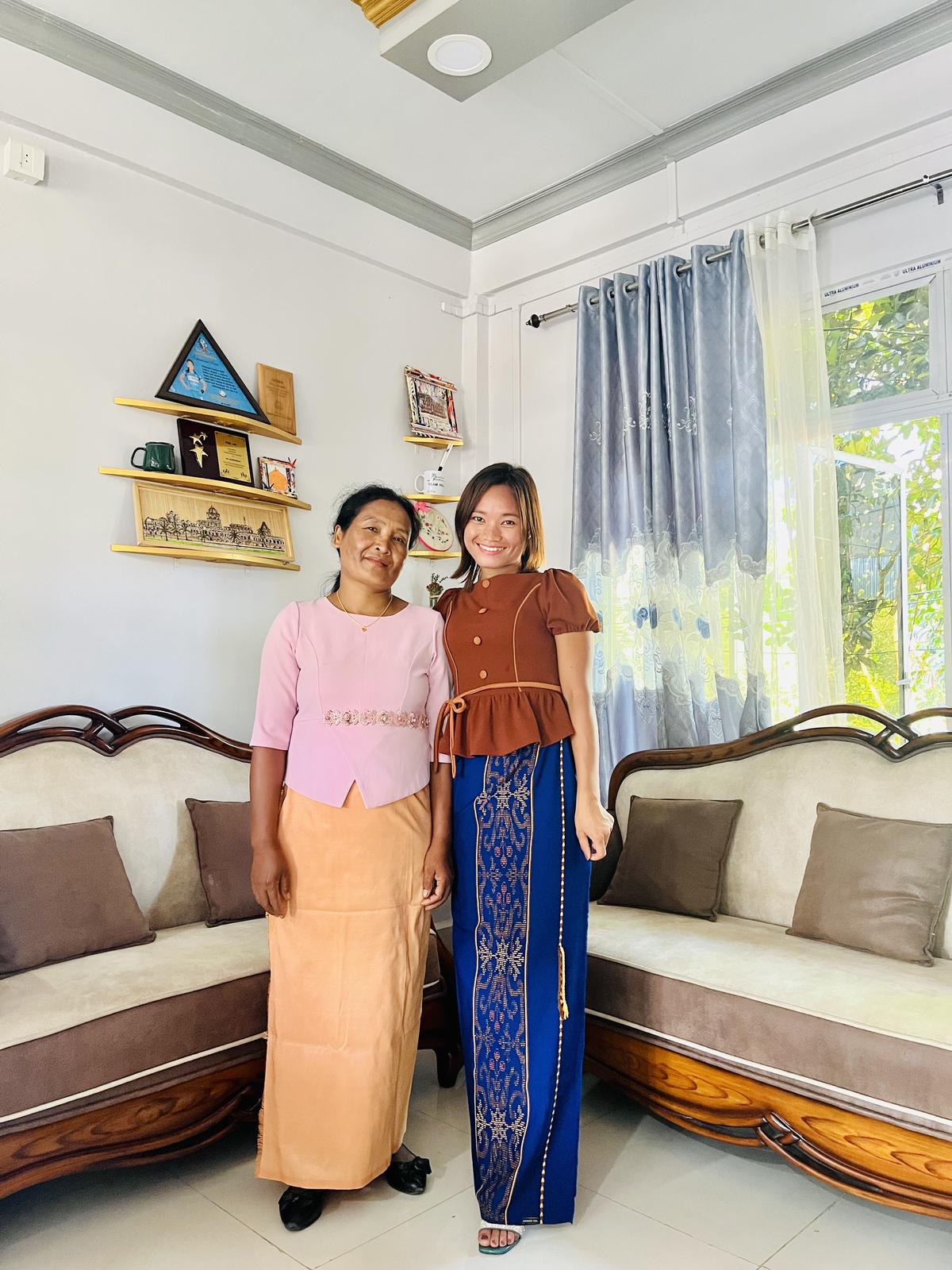
For Lalzarmawii, hockey became an emotional extension of the affection she has for her daughter. She never tried to coach Lalremsiami tactically, but there were moments when a mother’s fear overpowered everything else.
| Photo Credit:
Special Arrangement

For Lalzarmawii, hockey became an emotional extension of the affection she has for her daughter. She never tried to coach Lalremsiami tactically, but there were moments when a mother’s fear overpowered everything else.
| Photo Credit:
Special Arrangement
Confidant and cheerleader
“She has never seen me play live, she has only seen me on TV. Sometimes, even that is not possible, as not everything is televised in hockey,” Lalremsiami says about her mother Lalzarmawii.
What began as a mother trying to understand her daughter’s passion slowly evolved into someone who now experiences every match as though she were out there on the field herself.
“When she watches a match that we lost, she can’t eat properly as she is very stressed. She often tells me how her body pains after watching a game and that she can’t walk properly, even though she hasn’t done anything.”
For Lalzarmawii, hockey became an emotional extension of the affection she has for her daughter. She never tried to coach Lalremsiami tactically, but there were moments when a mother’s fear overpowered everything else.
“Since I run in Penalty Corners, I get injured a lot. She used to call me and tell me not to go next time because of that. I had to explain to her that it is my role in the team, and that is when she stopped saying it,” the 26-year-old explains.
Lalremsiami’s rise through the ranks was swift and unmistakable. She was part of the junior team that won silver at the 2018 Youth Olympic Games in Buenos Aires. That same year, she represented India at the Commonwealth Games and the Women’s World Cup, before helping the national side clinch silver at the Asian Games.
In 2019, she received the Asunta Lakra Award for Upcoming Player of the Year (Women – Under 21) from Hockey India – recognition that seemed to signal the beginning of an even brighter future.
Then tragedy arrived without warning.
While representing India at the FIH Series Finals in Hiroshima, Lalremsiami’s father, Lalthansanga Hmar Zote, passed away suddenly. She was only 19. She bravely chose to stay back with the team instead of returning home immediately. Life thereafter changed irrevocably.
ALSO READ | My mother once carried me to hospital: Akhil Kumar
“Things were very difficult for my mother to manage. She was very emotional and that is when we started talking more.”
For Lalremsiami, hockey had never just been about passion. It was also about possibility, about building a future strong enough to support her family financially. Seniors at her academy had spoken about stable jobs in the Railways, about opportunities sport could create, and she clung to those hopes.
Even before the academy, though, there had been her mother quietly nurturing a dream she barely understood.
“Even before I joined the academy, I used to play hockey and practice dribbling when at home. At that time, my mother didn’t know anything about hockey, but I found it very sweet that she would take good care of my hockey stick at home. She didn’t know what it meant to me, but still, she supported me with all her heart.”
Lalremsiami laughs when speaking about the one thing that continues to frustrate her.
“My mom can’t sit still, and that irritates me. She has to keep working and working. She can’t sit comfortably. Even when she walks, she does it very fast. Always fatafat fatafat (fast fast) in life. But that’s her habit; no one can stop her!”
And perhaps that restless energy is precisely what carried their family through its darkest years.
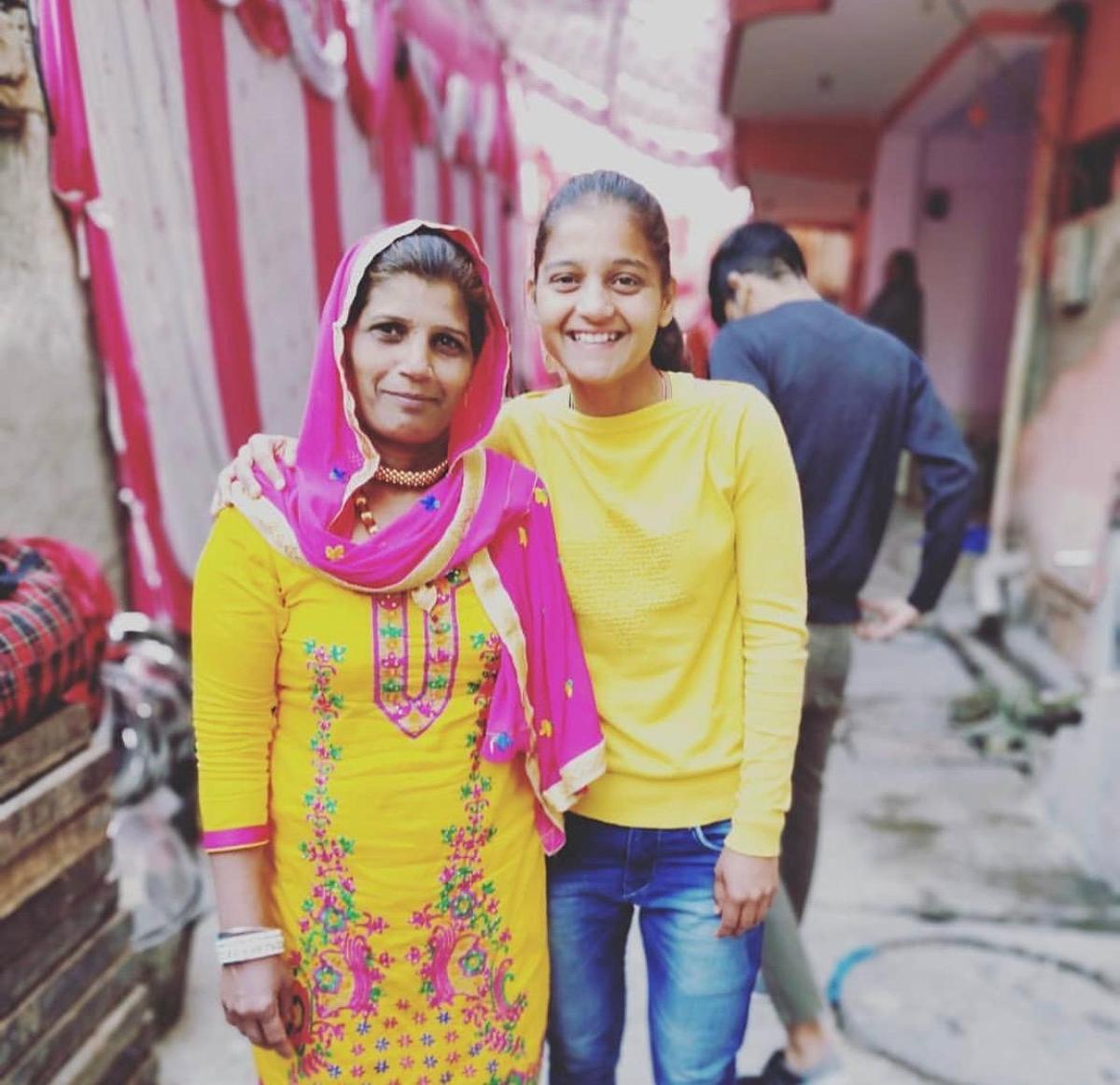
Jyoti’s mother Saroj shouldered the burden of the household when her husband Narender Singh passed away in 2009.
| Photo Credit:
Special Arrangement
Jyoti’s mother Saroj shouldered the burden of the household when her husband Narender Singh passed away in 2009.
| Photo Credit:
Special Arrangement
From broken days to unbroken resolve
Jyoti’s father, Narender Singh, passed away in a road accident in 2009 when she was barely 10 years old. In that single moment, childhood shifted shape – and the weight of an entire household fell on her mother, Saroj.
“My mother helped me as soon as I started playing hockey. She worked very hard for everything, like shoes and clothes. She made every possible effort to provide me with the best. If I needed something, she would arrange it,” Jyoti says, while admitting that they weren’t well off financially back then.
There were days when survival itself felt like negotiation. On one such occasion, Saroj broke down in a classroom, unable to pay her daughter’s school fees. It was a moment that could have ended many stories. Instead, it altered Jyoti’s forever.
Former India captain Pritam Siwach, who witnessed the incident, stepped in and offered young Jyoti a place at her hockey academy in exchange for her schooling. At first, hockey meant little to Jyoti. It was yet another unfamiliar world, another demand on an already stretched life. But something about the sight of girls running freely across the field, sticks slicing through the air and ambition alike, slowly pulled her into a rhythm she didn’t yet have words for.
What truly shaped her, however, was not the sport itself, but the woman who carried her through it.
“I have seen my mother walking three to four kilometers just to save ten rupees. She used to wake up at 4 a.m. and sleep at 10 p.m., managing all the work outside and taking care of her three children. I’ve never seen anyone as hardworking as her.”
There was no pause in Saroj’s life, no luxury of fatigue. Only motion: relentless, necessary, and uncelebrated.
ALSO READ | My mother receiving Khel Ratna on my behalf my happiest moment: Dhanraj Pillay
“No one else saw how much she struggled. As a single mother, she had to bear a lot of things for her children. She had to hear a lot from outside if her kids got up to any nonsense. She still had so much patience. It’s something I really liked about her.”
That patience became an inheritance. Not in wealth, but in character; in the discipline that would later define Jyoti’s own journey. Yet behind every ambition she chased was a simpler, more personal dream: to give her mother rest. To let Saroj finally stop needing to work.
That dream, heartbreakingly, remained incomplete.
“She worked till the very end. We tried to get her to stay at home. She worked even 10 to 15 days before she passed away.”
Even now, what lingers is not just loss, but unfinished love.
“She had two wishes. One was to travel and visit holy places, and I used to think that there is a lot of time in life, I can make it happen for her sometime later. Her other desire was to wear gold bangles. She used to say that if all her kids got government jobs, she would take one gold bangle from each and wear them. I forever regret not fulfilling these two wishes.”
In the end, Jyoti’s story is not only about a hockey player shaped by hardship. It is about a mother who carried an entire world on her shoulders – and a daughter who is still, in many ways, trying to carry her mother’s dreams across every field she steps onto.
Published on May 10, 2026