They say any publicity is good publicity. Or is it?
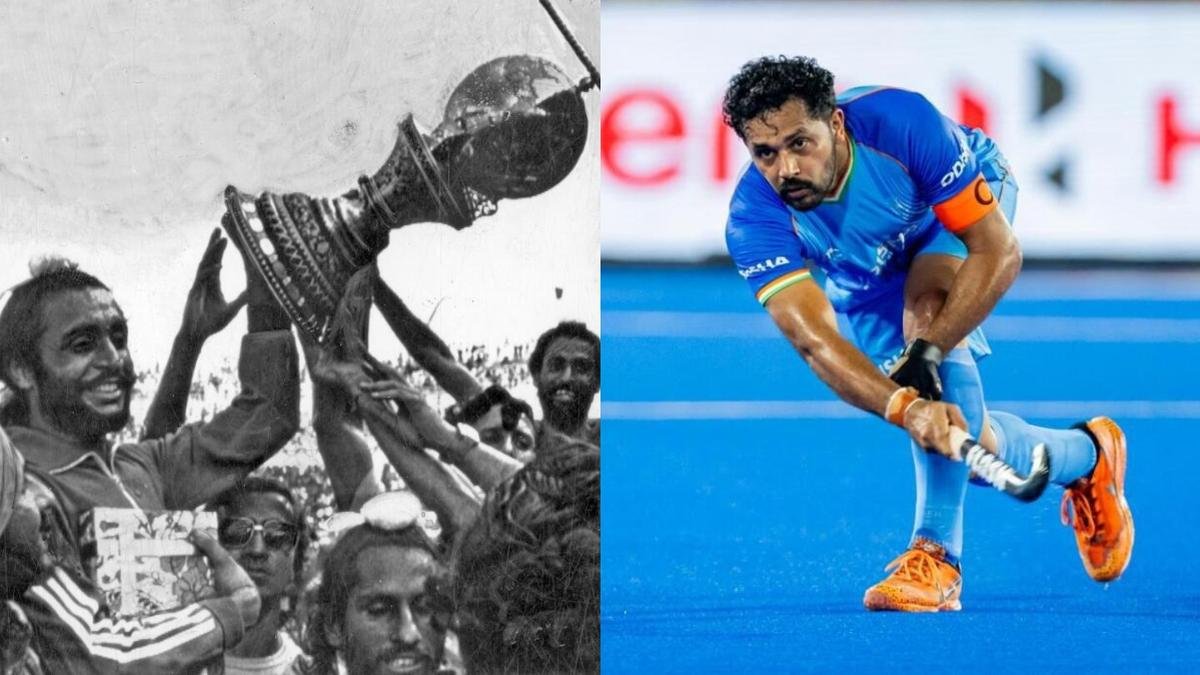
The upcoming men’s Hockey World Cup in the Netherlands and Belgium might have gone under the radar for many in India. The national team is an outside bet for the title and would need to play out of its skin to challenge for a podium finish. The World Cup, historically, hasn’t been India’s favoured playground — its last appearance in a final came way back in 1975, the year it won its only title.
Privately, the team management might admit to itself that the quadrennial tournament isn’t high on the pecking order among upcoming assignments. Three weeks after the World Cup concludes in Europe, India will head east to Japan for the much-fancied Asian Games, where an Olympic berth is up for grabs.
But Hockey India’s (HI) bizarre choice to rip up its long-standing tradition of sporting blue in favour of saffron for its jersey colour has brought about unwarranted attention. India’s recent track record, coupled with the unnecessary sideshow from HI, doesn’t augur well for an improved showing heading into the World Cup. But a change in kit colour ought to help change that, doesn’t it? Surely?
Head coach Craig Fulton will hope his decision-making has a definitive say in India’s fortunes in what will be an increasingly competitive field. The South African has selected near-identical squads for both tournaments, with heavy emphasis on experience. The combined international caps of Harmanpreet Singh, Manpreet Singh, Mandeep Singh and Amit Rohidas make up over 41 per cent of total appearances in the 20-man squad.
India couldn’t have asked for a better way to begin proceedings, being pooled together with Wales, England and Pakistan. But the new tournament format with two Pool stages mean India cannot afford a slow start. While England, which hasn’t lost in 17 games this year, might give India a stern test, the Men in Saffron (this is going to need some getting used to) will feel they can notch up victories over Wales and Pakistan to progress into the second round. Should it do so, the real test to a potential podium finish will come in Round 2, likely in the form of tough tests against Argentina and reigning Olympic champion Netherlands.

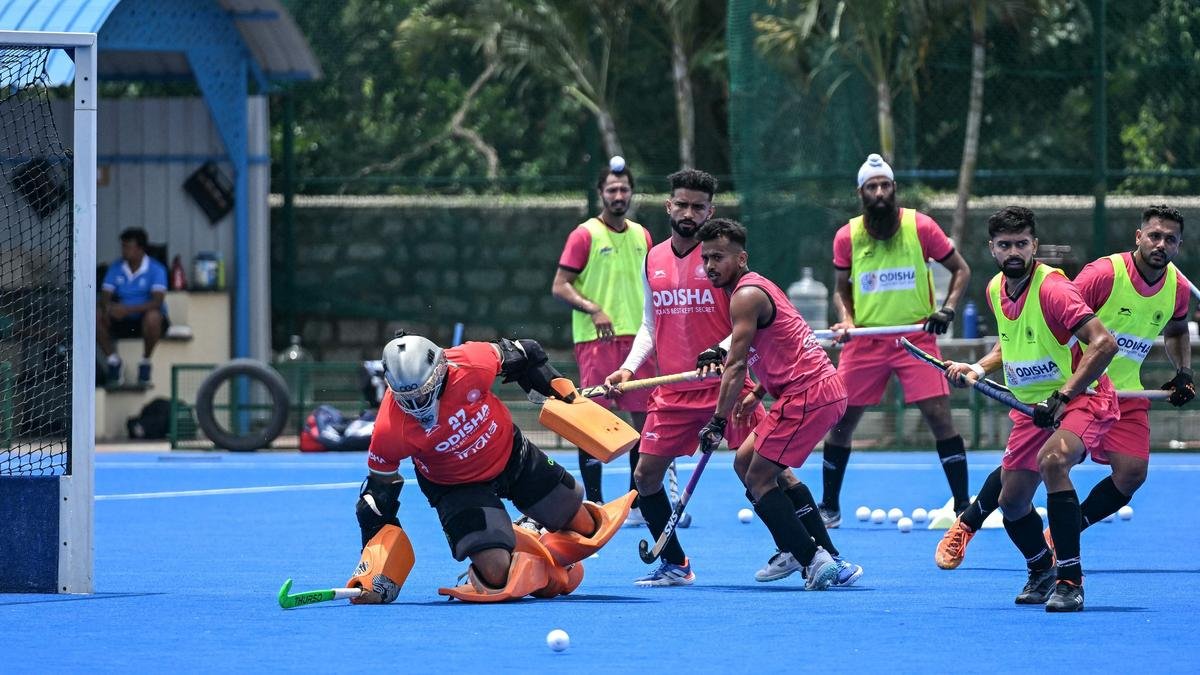
New look: The Indian hockey teams will be seen in saffron jerseys instead of their traditional blue kits starting this World Cup.
| Photo Credit:
Special Arrangement

New look: The Indian hockey teams will be seen in saffron jerseys instead of their traditional blue kits starting this World Cup.
| Photo Credit:
Special Arrangement
After a horrendous start to the Pro League campaign at home, India’s results picked up in the Australian and European legs, adding creditable victories over Germany and the Netherlands.
Fulton, who places great emphasis on defensive solidity, would have been pleased with India’s renaissance. In the opening eight games of the Pro League, teams sliced India open with ease, scoring 25 goals, while averaging 25 circle penetrations against it. In the final eight games, it tightened its structure and backline, conceding just 14, with circle penetrations coming down to 17 per game.
Another concern would have been how vulnerable India looked in the early stages of matches, often being dispossessed or seeing misplaced passes force turnovers in its own half. That issue seems to be getting slowly addressed — India conceded nine goals in the first quarters of the opening eight games, but that came down to just three on the European tour.
In goal, Krishan Pathak was long viewed as P.R. Sreejesh’s replacement, but his sacking at the start of the year for disciplinary reasons has thwarted India’s progress. Suraj Karkera and Mohit H.S. have come along well after some shaky displays, but remain prone to errors.
India will hope it retains its good habits when it comes up against traditional favourites Belgium, Germany, the Netherlands and Australia, sides that are tactically sound with highly skilled technical players who can prove to be difference-makers.
Last edition’s runner-up and co-host Belgium comes into the tournament as the in-form side, having won the Pro League in style. Shane McLeod’s side operates in a similar defensive counter-attacking style to India’s, but the Red Lions manage to do it at a superior level.

Think tank: Head coach Craig Fulton (right) will hope his decision-making has a definitive say in India’s fortunes in what will be an increasingly competitive field.
| Photo Credit:
PTI
Think tank: Head coach Craig Fulton (right) will hope his decision-making has a definitive say in India’s fortunes in what will be an increasingly competitive field.
| Photo Credit:
PTI
Veteran forward Tom Boon and defender Alexander Hendrickx accounted for 34 of the 59 goals in the Pro League. Both provide a lethal threat from Penalty Corners (PC), too, with the pair tallying 22 from set-piece plays.
Their prowess is reflected in Belgium’s efficiency from PCs, with the team boasting the best conversion rate (34.67 per cent) among all teams. Skipper Arthur van Doren continues to be the team’s lynchpin in defence, with his ability to nullify attackers and his pinpoint passing from deeper areas.
Defending champion Germany has undergone a significant squad overhaul since its triumph in Bhubaneswar, with only nine of the title-winning group and 11 of the Olympic silver-medal-winning group from the following year returning under head coach Andre Henning. While the recently concluded Pro League was among its worst in recent memory, it will be hard to discount Germany’s tradition of turning up at big tournaments.
After losing out on gold at the Olympics, it avenged its defeat against rival Netherlands in the EuroHockey Championships final, thanks to Jean-Paul Danneberg’s heroics in the penalty shoot-out.
Star midfielder Christopher Ruhr is the only player with over 200 caps in a squad that has an average age of just 25. Despite losing out on Gonzalo Peillat’s thunderbolts from PCs, Germany has replaced them with youngsters Jakob Brilla and Benedikt Schwarzhaupt. Brilla is among the five junior World Cup winners from 2023 and 2025 in the senior squad, with the team clearly in transition, possibly with the LA Games in mind.
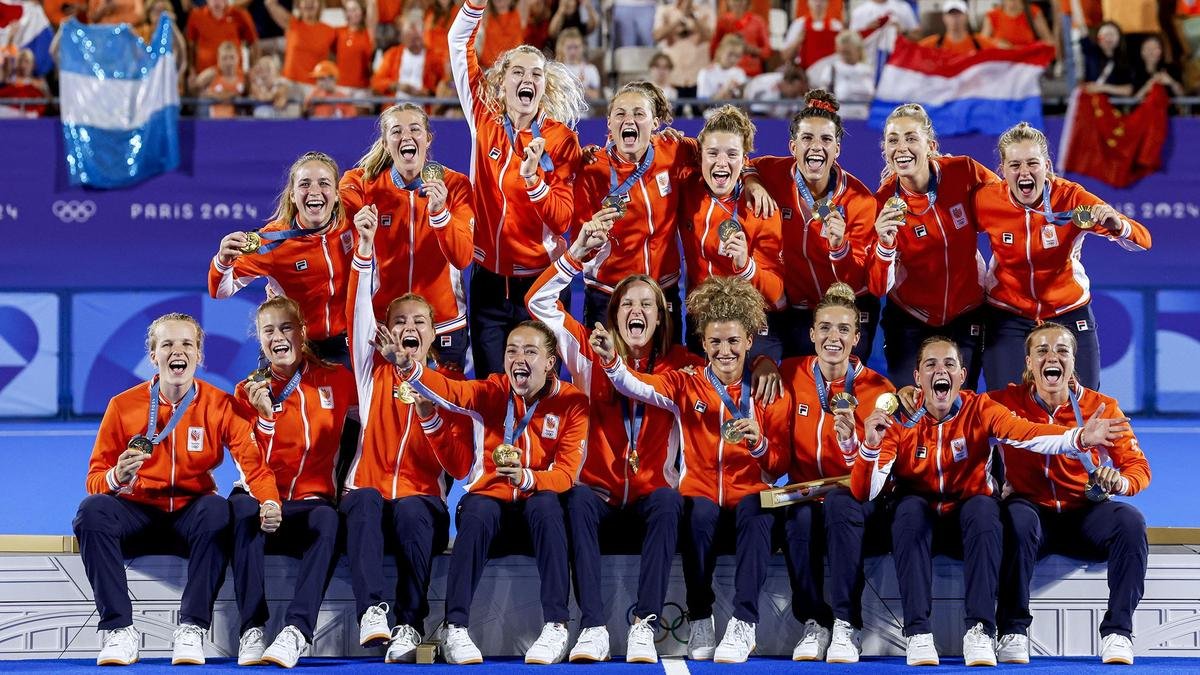
Germany will be kept separated from the Netherlands, which will be keen to bank on its record of reaching finals in its three previous home editions, winning two. Head coach Jeroen Delmee made his intentions clear during the squad announcement, stating, “When you play a World Championship on home soil as the current Olympic champion, you go for gold.”
Roared on by a passionate home crowd, the Orange will want to unleash its fluent brand of hockey, facilitated by its suffocating full-court press and rapid transitions from defence to attack. Leading the press will be captain Thierry Brinkmann and Duco Telgenkamp in the forward line. Telgenkamp emerged as its leading scorer in the Pro League, registering the second-highest number of field goals with seven.

Defending champion Germany has undergone a significant squad overhaul since its triumph in Bhubaneswar three years ago.
| Photo Credit:
K. R. DEEPAK
Defending champion Germany has undergone a significant squad overhaul since its triumph in Bhubaneswar three years ago.
| Photo Credit:
K. R. DEEPAK
The Dutch will pose a serious threat from PCs, with Jip Janssen, Tijmen Reyenga and Pepijn van der Heijden adding depth. The return of midfielder Jorrit Croon and forward Thijs van Dam from injury will transform the Dutch into a formidable unit.
Australia comes into the World Cup after a mixed Pro League season, in which it started strongly before suffering five defeats in the last eight, including a heavy 6-3 loss to the Dutch. Yet, it also produced two clinical displays to down co-hosts the Netherlands and Belgium at Wavre, one of the World Cup venues. PCs will be an area of concern for the Kookaburras, whose conversion of 19 from 97 attempts was the worst among all teams.
England will be riding high on confidence and form, with Zak Jones’ men scoring 54 goals and conceding just 17 during their unbeaten run in 2026. The performances culminated in a second-place finish in the Pro League with the second-best defensive record. It possesses a dynamic forward in Nicholas Bandurak, who is equally adept in both open play and PCs. Goals have been shared around, too, with Henry Croft, Sam Hooper and Sam Ward accounting for 18 goals between them.
Argentina is a potential dark horse, aiming to cash in on the goal-scoring form of forward Tomas Domenne, who rattled in 21 goals in the Pro League. Spain is another outside contender with its all-round play, hoping to cause an upset or two.
The field for the World Cup is stronger than ever, with Europe continuing to dominate through tactical evolution, structural discipline and depth in talent. Five of the last seven World Cups have been won by a European team, and all signs point towards Europe widening its gap from the rest of the world. While India has made improvements in recent months, whether that translates into a long-awaited podium finish or serves as a platform for the higher-stakes Asian Games remains to be seen.
Published on Aug 14, 2026