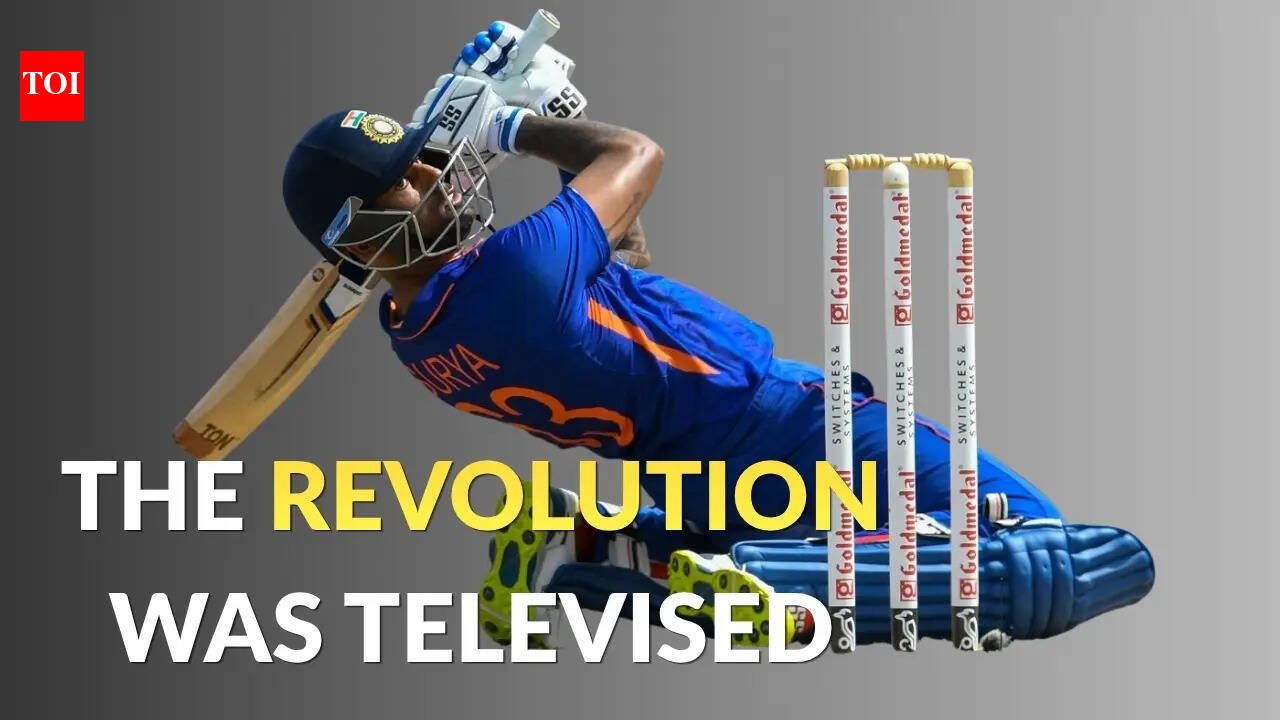
In a move that was as unceremonious as it was unprecedented, Suryakumar Yadav was not only removed from India’s T20 captaincy but also dropped from the squad itself, just three months after he led India to the 2026 T20 World Cup title.It was a monumental call by the BCCI selection committee and, perhaps, the right one, given the evident dip in Suryakumar Yadav’s form over the last year and a half.Yet, there’s no denying that Surya has been the finest T20 batter India has ever produced. Possessing a range of shots unmatched in Indian cricket and astonishingly flexible wrists, he could send the same delivery over deep third, covers, midwicket or fine leg.But beyond his individual brilliance, Suryakumar’s role was also instrumental in transforming the way T20 cricket is played in India.India’s T20 journey can almost be divided into two phases: before and after Suryakumar Yadav. There was a distinct style of T20 cricket India played before Surya came into the side, and it looks very different now, five years after his debut and at a time when he has been left out of the squad.
India before Surya
Before Suryakumar made his debut, there were 12 batters who had faced 300 or more balls for India in T20Is. Among them, Virat Kohli had the highest average at 49.63, while KL Rahul had the highest strike rate at 144.48. In fact, Rahul was the only one among them with a strike rate above 140.Rohit Sharma had a strike rate of 138.79, Kohli 138.11, Yuvraj Singh 136.38 and MS Dhoni 126.13.Among all Indian batters who had faced at least 300 balls before Surya’s debut, Yuvraj had the best six-hitting rate, striking a six every 11.66 balls. Rohit hit one every 15.73 balls, Kohli every 26.17 balls and Dhoni every 24.65 balls.Indian T20 batting was full of anchors and run accumulators rather than hitters, a requirement of the format, which was one of the reasons India had fallen behind in the T20 race.
Six off Jofra and the beginning of India’s T20 revolution
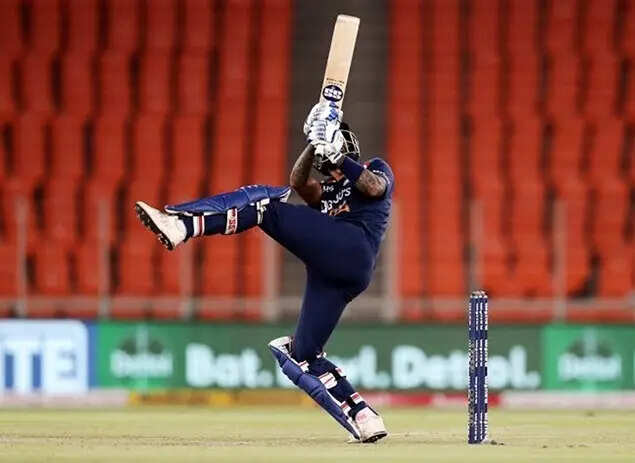
When Suryakumar Yadav walked out to bat for the first time in T20Is against England in the fourth match of the series in March 2021, he was surrounded by three anchors — Rohit, Rahul and Kohli.Facing his first ball in T20Is, from Jofra Archer in Ahmedabad, Suryakumar nonchalantly played a one-legged ramp hook, sending the England pacer over deep backward square leg for six. That shot would come to symbolise the breaking of India’s conservative T20 batting mould and mark the beginning of the country’s modern, high-intent T20 revolution.
The next step
Averages, when looked at in isolation, can often be a misleading metric to judge a batter in T20 cricket. However, when viewed alongside strike rate, they can offer a clearer picture. They can help explain, though not always, whether a batter is scoring quickly enough to to win the game, or merely preserving their wicket.Some batters may have an average above 30 or 35 in T20s, while others may possess a strike rate touching 170.But sustaining both over a long period is difficult. Unless you are Suryakumar Yadav.From Surya’s debut in 2021 until India’s T20 World Cup triumph in Barbados in 2024, 10 batters faced 300 or more balls for India in T20Is. Among them, Kohli had the best average at 46.67 but a strike rate of 134.62.Suryakumar not only had the second-best average at 43.33 during this period, he also struck at 167.74. He was India’s highest run-scorer with 2,340 runs and also had the best strike rate among those batters.He was scoring more runs than anyone else in the team while also scoring them faster than anyone else, hitting a six every 10.49 balls.Between 2022 and 2023, there was arguably no more destructive batter in T20 cricket than Surya. In 2022 alone, he scored 1,158 T20I runs at an average of 48.2 and a strike rate of 187. He followed it with 733 runs in 2023 at an average of 48.9. In those two years, he averaged 48.5 while striking at 173.6.India’s talisman in T20Is was named the ICC Men’s T20I Cricketer of the Year in both 2022 and 2023. He was the first Indian to win the award and won it in consecutive years..
India under Surya
Until the 2024 T20 World Cup, Surya was the lone T20 specialist in the side for much of the period. Shivam Dube was the other one after returning to the team in late 2023.When Surya took over the captaincy after the 2024 T20 World Cup, he did not replace Rohit and Kohli with more anchors. Instead, he backed players like Abhishek Sharma and handed Sanju Samson a permanent opening role.Surya injected his fearless DNA into the batting line-up and oversaw the team’s transformation into a six-hitting powerhouse, making India one of the most destructive and difficult teams to beat in the world.Eight batters faced 250 or more balls for India between the end of the 2024 T20 World Cup and the 2026 T20 World Cup. Among them, four maintained strike rates above 160, with Ishan Kishan leading at 207.00, followed by Abhishek Sharma at 190.46.Only two batters scored at a strike rate below 150 — Tilak Varma (147.62) and Shubman Gill (133.50). Surya struck at 152.04 while averaging 25.89.Kishan also had the best six-hitting frequency, clearing the ropes once every 7.56 balls faced, narrowly ahead of Abhishek Sharma at 7.86.Before Surya made his India debut, only one of the team’s leading T20 batters hit a six every 12 balls or fewer. Now, at a time when he has been left out of the squad, five of India’s top eight batters clear the ropes every 10 balls or fewer.
Face of India’s T20 revolution
It is often difficult to separate a player from the era he plays in. T20 cricket was changing everywhere when Suryakumar Yadav made his debut. Teams were scoring faster, batters were taking more risks and the range of shots kept expanding. It is entirely possible that India would eventually have moved in the same direction even without him. The demands of the format were pushing every team towards a more aggressive brand of cricket.Yet it is hard to ignore how clearly India’s transformation in the format overlaps with Surya’s time in the side and how often he stood at the centre of it.
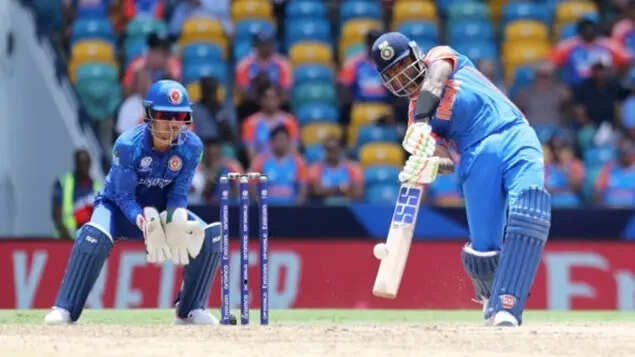
India still had one foot in an older version of T20 cricket when Surya came into the side. Now, at a time when he has been left out of the squad, India have become a team filled with hitters and T20 specialists who go full throttle from ball one and hit more sixes than ever before. Surya was not solely responsible for that change, but he was at its centre.Surya’s greatest skill has not been power but access. A fast bowler could deliver a good ball outside off stump and watch it disappear over fine leg with that now-famous supla shot. A spinner trying to cramp him for room could still be lofted over covers. Few players have manipulated a field the way he did. Fewer still have done it while scoring as many runs as he did.That success is visible in the numbers: 3,272 runs, 25 fifties, four hundreds, a strike rate of 162.9, two T20 World Cup titles and an unbeaten record in bilateral series as captain in T20Is. For a player who did not make his T20I debut until the age of 30, it is a body of work few could have imagined.In sport, you never say never and comebacks are always possible. Yet whether or not Surya adds to his T20I numbers, his influence on Indian T20 cricket is unlikely to fade. Few players have been as closely associated with a shift in how a team thinks about a format. India’s T20 revolution had many contributors, but Surya was one of its most visible faces and its clearest expression.