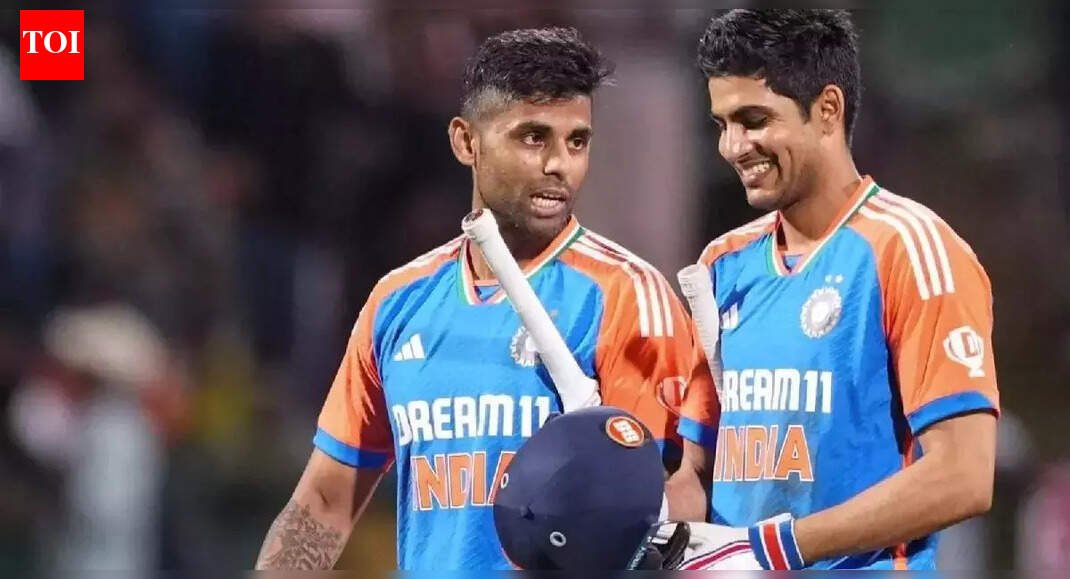
NEW CHANDIGARH: The Indian team came into this T20I series against South Africa with the clear objective of identifying the chinks in the T20 team, with just another five games remaining at home against New Zealand leading up to the T20 World Cup in Feb-March. Instead, a new problem has emerged — the leadership group in the team is woefully short of runs and there seems to be no clear way out.
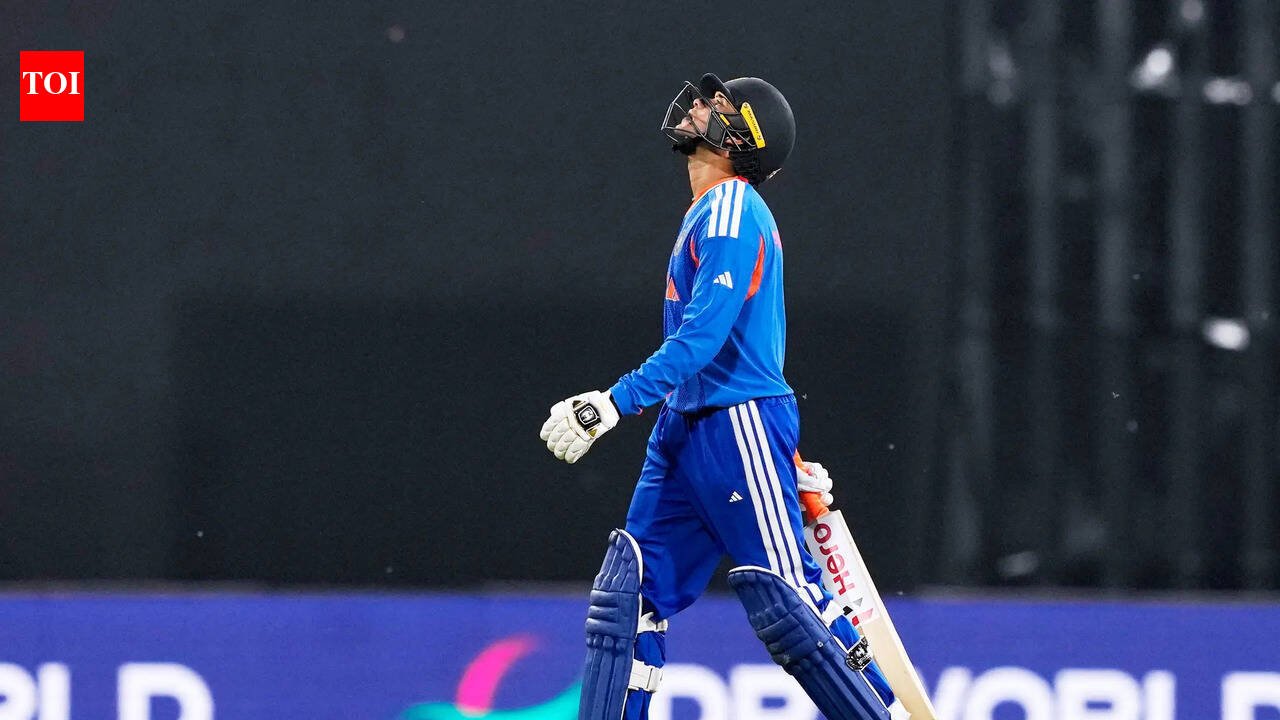
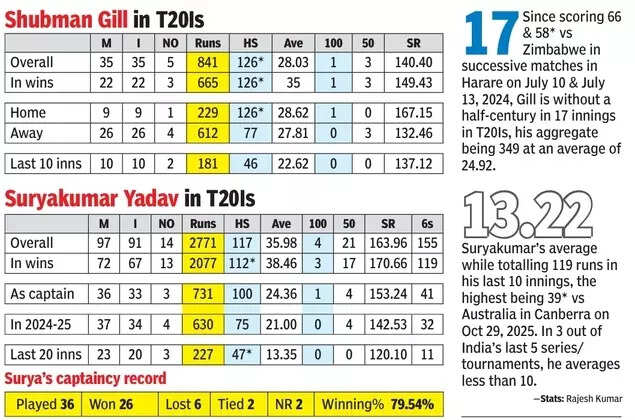
The question needs to be asked: Are captain Suryakumar Yadav and vice-captain Shubman Gill becoming misfits in the playing XI because of their prolonged slump? Gill’s return to the T20I playing XI at the expense of Sanju Samson at the top of the order is unending. The bigger worry, however, is Surya’s prolonged run of poor form since assuming full time T20I captaincy after displacing Hardik Pandya.Since Gautam Gambhir took charge as head coach, there have been many changes in the T20I outfit, especially the emergence of Abhishek Sharma and Tilak Varma and the resurgence of Varun Chakravarthy. The shift happened when most of the country’s top resources — which includes the likes of Shubman Gill, Kuldeep Yadav, Jasprit Bumrah and Yashasvi Jaiswal — were assigned Test cricket duties.Consumed by the euphoria of this new-look T20I team’s fresh and aggressive brand of cricket, symptoms of Surya’s declining returns went largely unnoticed. That he came out to bat at No. 4 after Axar Patel against a potent South African seam attack on Thursday was a giveaway that the team management is now unsure about Surya’s capability to deliver when it matters. Since November 2024, Surya’s average has been 13.35 at a strike rate of 120 in 20 outings. Those numbers don’t fit the team’s bill. From being dismissive about his form in the Asia Cup a couple of months back, Surya has gone to conceding that he and Gill will have to take more responsibility and not just depend on Abhishek.India’s assistant coach Ryan ten Doeschate hinted that both Surya and Gill were perhaps not playing with the mindset that the team expects of them. “If you’re going to be India’s No. 3, there’s pressure on you to score runs. There’s been a fairly long run of form now where he hasn’t got the scores we would like. “Batting at No. 3, the job we want for him is to go out there and attack. He’s been a fantastic leader of this group,” Doeschate said after the defeat in the second T20I here on Thursday night. As for Gill, his T20I approach has been a bit concerning. The sudden promotion to a prominent leadership role may have burdened him with many new responsibilities.
“With Shubman, taking up the captaincy the way he did in England, seeing how well he led and how much pride he took in that performance, I think an element of that carried over into what he wanted to do in the T20I side. If anything, he was too caring and maybe a little bit too tight,” Doeschate said. “Towards the back end of the Australia tour, the talk was about freeing up a little bit more, try to relinquish that responsibility, certainly in that capacity where you feel like it’s all about you and you really need to justify your place in the team. We don’t want him to do that. We want him to play as freely as he does during IPL seasons,” he added. Just after the high of the T20 World Cup win in 2024, Indian cricket rushed towards an inevitable transition. Some tough calls were taken, especially in assigning leadership roles across formats.Both Gill and Surya were catapulted to the captaincy ahead of men in queue. As Doeschate said, it may have started to play on their minds, leading to constant anxiety to prove their worth as leaders.“About the leadership roles, we’re quite far down the road now with our planning and you know how we have set the team up,” Doeschate said. However, the team management, in its rush to prove its flexible approach, has often made whimsical moves, like Axar Patel’s promotion on Thursday night to No. 3, which meant two left handers were at the crease, which goes against most T20 match-up theories.“We’ve got eight games now before the World cup. Frankly, we found ourselves being 35/3 more times than we would have liked in the last couple of months. It’s just a exploration into how we can extend the batting,” Doeschate explained. But it also leaves one wondering if the team management has enough faith in proper batters to do the job at the top. Shielding the captain may not be the best idea.The Indian team management took harsh calls in 2024 hoping things would stabilise by the 2026 T20 World Cup. It’s just the men they put behind the wheels to steer the team out of choppy waters are in turmoil. With two months and eight games to go, the best the team management could do is define roles and bring stability.