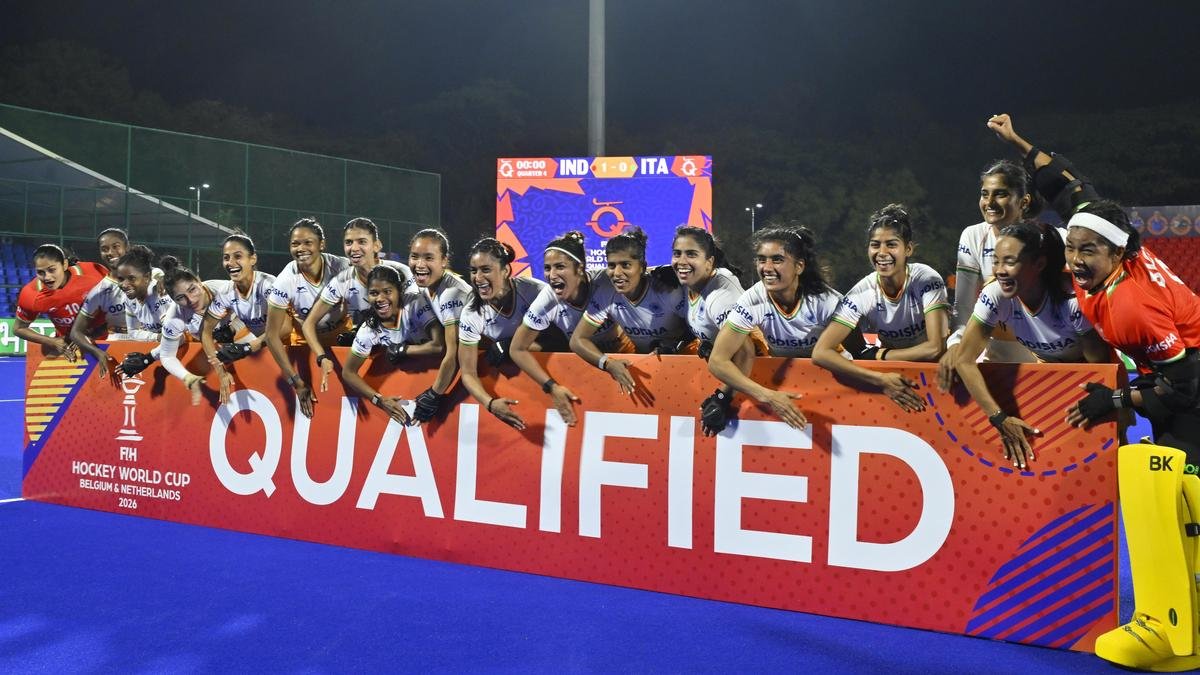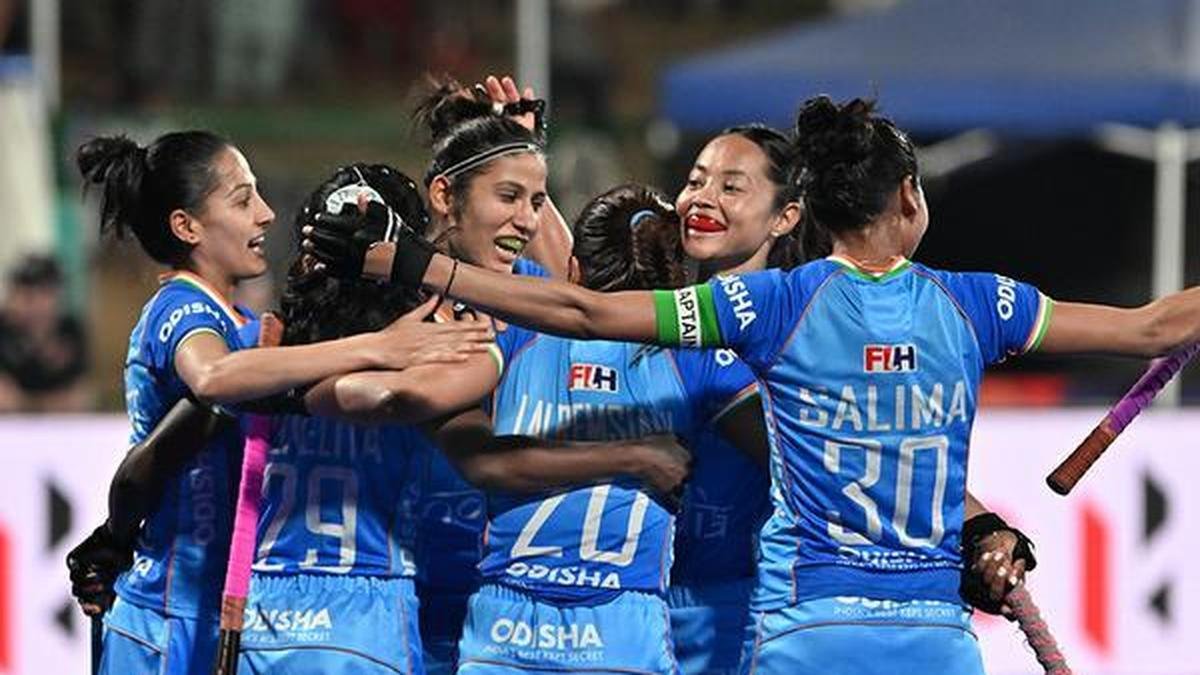
While it was not a flawless FIH Women’s World Cup Qualifiers campaign at the G.M.C. Balayogi Hockey Ground here, India leaves with its main target achieved: qualification for this year’s marquee event secured without any real trouble.
The bare numbers from the Women in Blue’s campaign tell a straightforward story: three wins, one draw, one defeat, 11 goals scored, and five conceded in what was head coach Sjoerd Marijne’s first tournament since returning for his second stint in charge.
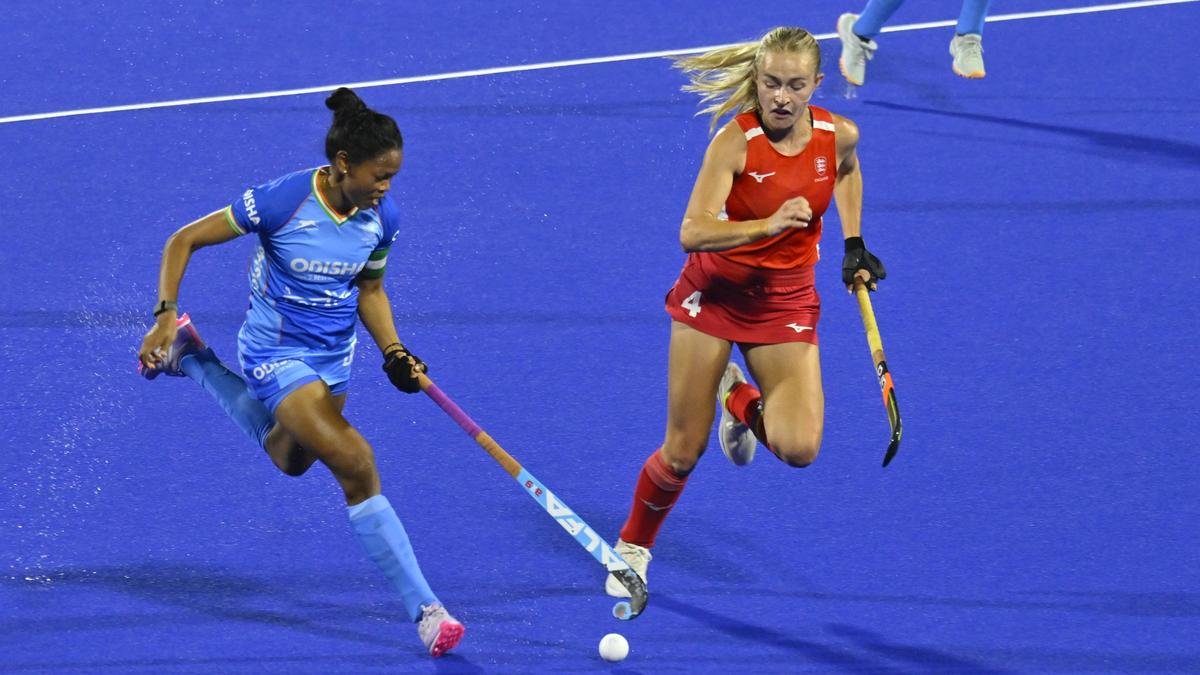
Yet beneath those numbers lies a familiar concern: finishing. And it isn’t a new one, as former coaches Janneke Schopman, Harendra Singh, and perhaps Marijne himself will attest. The Dutchman echoed the same sentiment after India’s 2-0 loss to England in Saturday’s final.
“There is a lot of room for improvement. We create chances even under pressure, but the quality, especially on the technical side, needs to be better. The decision-making needs to be better. We need to take better positions in the circle,” he told reporters.
Penalty corners, in particular, remain an area of concern.
ALSO READ: Which teams have qualified for FIH Women’s Hockey World Cup-2026?
“They (England) got two PCs and scored from one. We got four and didn’t score any. If you don’t score your PCs, you must score your field opportunities. But PCs, most of the time, help in breaking the contest. That’s what we needed (against England) and, unfortunately, that didn’t happen.”
The critical notes and the defeat in the final aside, Marijne insisted there were several positive takeaways too, despite choosing to be miserly about revealing them.
“I saw how the girls reacted in the semifinal and final, how they performed under pressure. You can’t do that in a training camp; you can’t replicate this pressure. I could see a lot of (good) things, which I will keep for myself.
“We’re playing more give-and-go hockey (now), which is something that we improved on. We’re also creating a lot of opportunities. When you’re coming into a team, you want to improve 20 things. But you cannot do that. You make a list of five or 10 things, and you take it from there. And that’s why the information (I got) from these matches is so important.”
Published on Mar 15, 2026