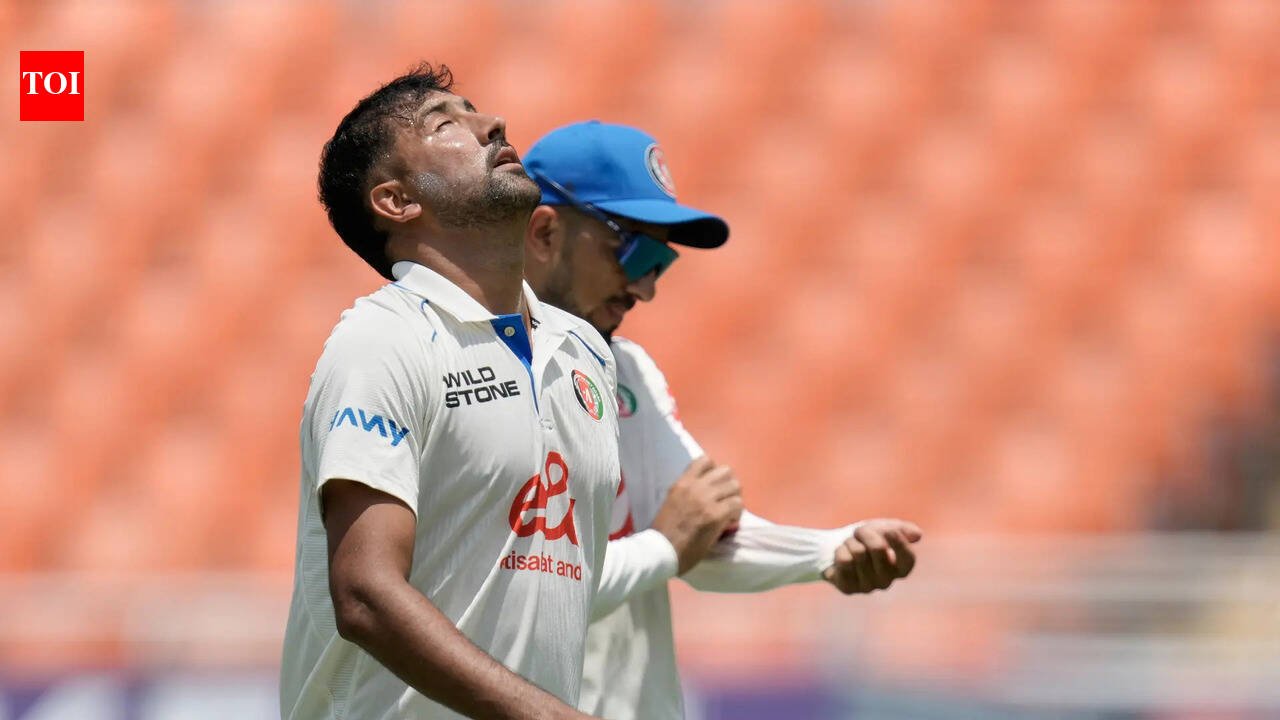
TimesofIndia.com in Mullanpur: Three years ago, when Rana Naved-ul-Hasan arrived at Afghanistan’s high-performance centre in Kabul as bowling coach, one young fast bowler immediately grabbed his attention. Mohammad Saleem Safi, a lanky pacer from Baghlan province, was bowling with genuine pace and troubling some of Afghanistan’s accomplished batters in the nets.“He was touching 145 kph. It excited me. I was in awe because you don’t often find genuine fast bowlers in Afghanistan. Yes, there have been several medium pacers, but an out-and-out quick is a rarity. Last evening my daughter got married, so I was not able to watch the match, but I followed the live commentary and felt he bowled well. Today, he has been exceptional. He bowled hard lengths and it was good to see him operating in the high 130s,” Rana Naved-ul-Hasan tells TimesofIndia.com from Sheikhupura in Pakistan.“Saleem saab ki engine garm hone mein thoda waqt lag gaya (It took a while for Saleem to get into the groove),” laughs Naved-ul-Hasan.The former Pakistan bowler is right in his assessment of the 23-year-old Afghanistan pacer. He bowled well on Day 1, but only in patches. He was wayward and failed to sustain pressure over an entire over after bowling a couple of good deliveries. But whenever he hit the right areas, he troubled the batters.Before this one-off Test against India, Safi had failed to take a single wicket in his previous four international appearances. He had played one Test, two ODIs and one T20I, but ended up bagging six against India.On the opening day, he claimed the prized wickets of Yashasvi Jaiswal and Sai Sudharsan. With the new ball, he bowled probing lengths and kept the Indian batters on their toes. Jaiswal was strangled down the leg side, while Sudharsan chased a 142 kph delivery on the fifth-stump line, edged it behind, and broke the 139-run stand for the second wicket.
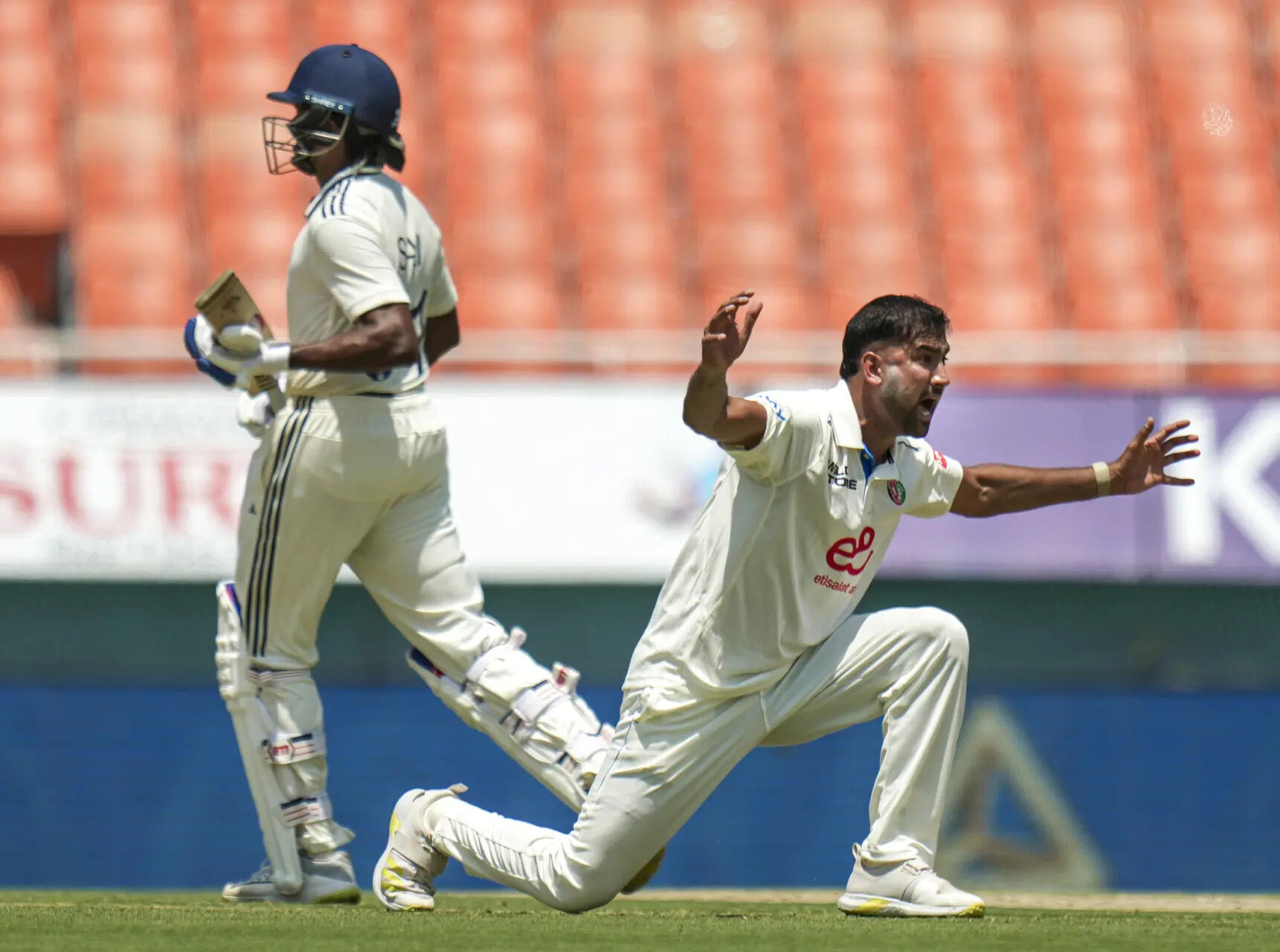
Mohammad Saleem (PTI Photo)
On the second day, with the second new ball, Mohammad Saleem Safi made the ball talk at pace. He dismissed centurion Shubman Gill. The Indian captain, who had played a chanceless knock on the first day, looked a tad rusty. In the over before he got out, Gill had drilled Saleem for a couple of delectable boundaries. But the bowler had the last laugh. He hit the deck hard and extracted bounce, inducing a thick outside edge that Afsar Zazai safely caught behind the stumps.Then he forced an error in judgment from Dhruv Jurel. The Indian batter thought the ball was outside the line of the stumps and would bounce over. But to Jurel’s horror, it nipped back just enough to crash into the top of off stump.Safi had been relentless all morning and was finally rewarded with wickets. Then came the biggest moment of his cricketing career when he found the outside edge of debutant Manav Suthar to complete his maiden five-wicket haul. He was pumped. He did a small lap with his hands raised, touched his forehead to the ground in celebration, and was then mobbed by teammates. He added another wicket to his column by cleaning up Mohammed Siraj and finished with career-best figures of 6 for 140.“Last year he got injured. He is coming back after a long injury lay-off. He looked in good rhythm. The inexperience was quite visible, but the more he plays, the better he will become,” said a proud Naved-ul-Hasan.Naved-ul-Hasan says there is a tectonic shift towards fast bowling in Afghanistan and credits the robust domestic structure and ever-improving infrastructure.“The world has only seen mystery spinners coming out of Afghanistan, but now there is a massive shift. An annual fast-bowling talent hunt is being organised, and at the U-19 and A-team levels, there are many players in the pipeline,” he said.Between February and November, Afghanistan hosts seven domestic tournaments spanning all three formats, with Rana Naved-ul-Hasan actively participating in talent identification for the development programme. Responsibility then falls on the national high-performance centre to scout standout players from the domestic circuit, creating a structured pathway to prepare them for national-team selection.“They have six teams in first-class cricket. Then there is Division Two, where teams play three-day cricket. They are very good in white-ball cricket, but in the longer format they are still learning. However, they are on the right path,” said Naved, who enjoyed a prominent career for Pakistan between 2003 and 2010, particularly in ODIs.“Take the example of Saleem. He has this hunger. I have travelled across Afghanistan and the fire in the belly among these kids is unmatched,” he said.
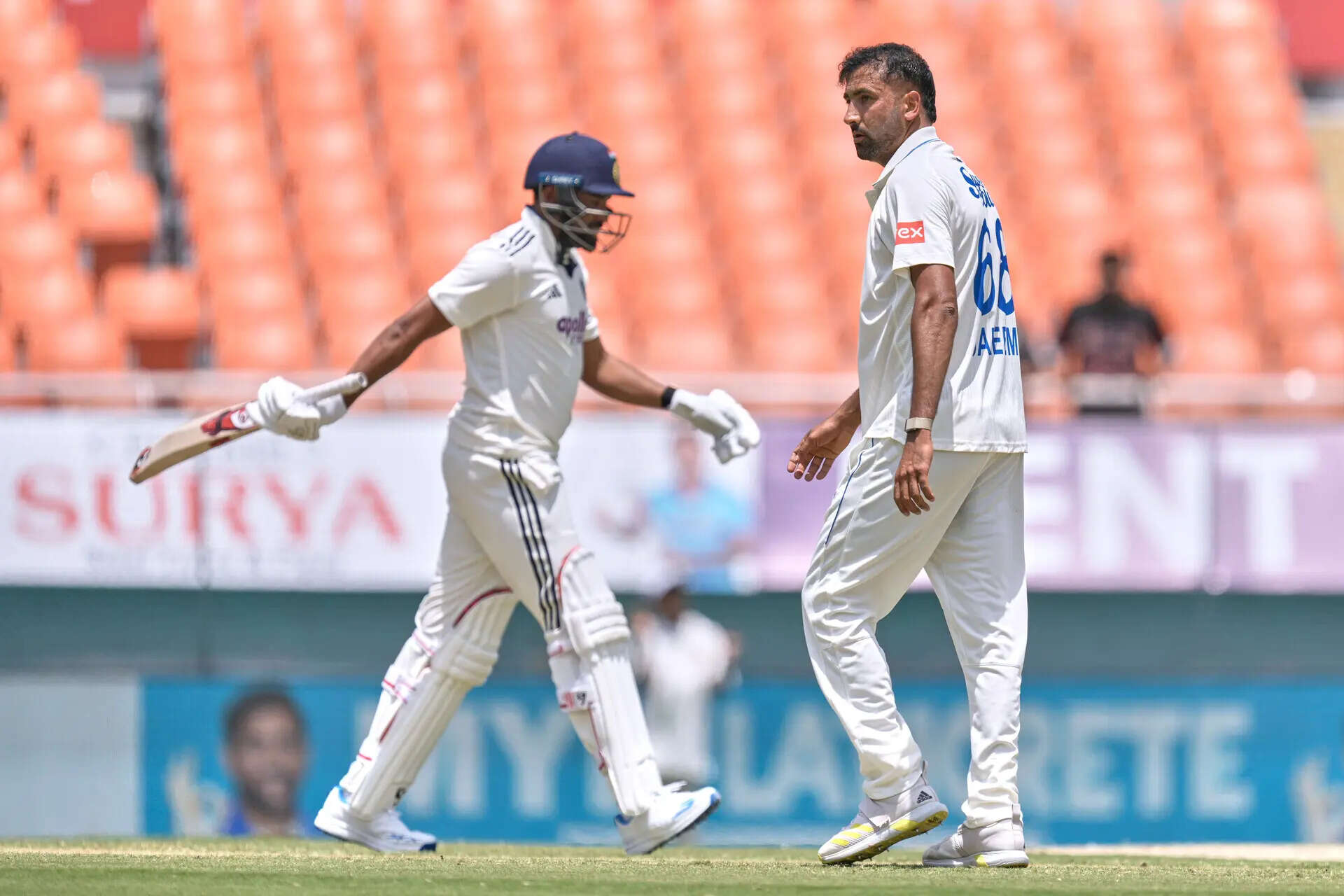
Mohammed Siraj leaves the ground after getting bowled out by Afghanistan’s Mohammad Saleem. (AP Photo)
Naved-ul-Hasan and former Pakistan opener Imran Farhat’s job at the performance centre is to build separate teams for all three formats.“The culture of T20 cricket is stronger. Obviously, it is the format that has given them stars. But the main goal is to prepare quality fast bowlers for Test cricket. I have selected eight to ten fast bowlers. Saleem and Ziaur Rahman Sharifi are playing in this Test. The target is to create a pool of fast bowlers who can serve Afghanistan across all three formats,” he said.But there are challenges for the Afghanistan Cricket Board (ACB) as well. Many promising cricketers have left the game because of financial difficulties.In an interview with the ACB in 2020, Mohammad Saleem Safi admitted that financial issues had once pushed him away from cricket.“I started playing cricket about a year ago (2019), but due to severe economic and financial difficulties, I am struggling to move forward. However, I am still putting a lot of effort into my cricket. Cricket is very special to me,” he had said.All these years later, Saleem Safi’s hard work has paid off. Afghanistan’s open-chested predator was the destroyer-in-chief on a flat Mullanpur wicket under the harsh sun. His effort has also put a smile on Rana Naved-ul-Hasan’s face, giving him another reason to celebrate the work being done in Kabul.“It was so satisfying. An Afghanistan pacer clocking 140 kph and taking six wickets against India. A perfect day for me,” he said.